“They never let you be famous and happy.”
“I’ll tell you a secret.”
“Tell me.”
“I’m going to be the first.”
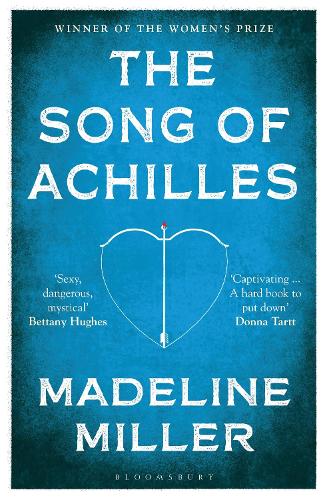
I spent a few days thinking about what I wanted to say about The Song of Achilles. The book has an enormous following and is widely praised, so I was curious to see whether my own reaction would match the enthusiasm surrounding it.
Before reading the novel, I had a fairly basic understanding of Greek mythology, largely from writers like Rick Riordan and Jennifer Saint, as well as the occasional late-night Wikipedia exploration. I was not going into the story completely blind.
From the first page, I found myself drawn in. Telling the story from Patroclus’ perspective is an inspired choice. It allows the Trojan War to be viewed not through the eyes of legendary heroes but through someone who feels far more human and vulnerable.
Miller’s prose is elegant and often deeply moving. At times, the writing is almost lyrical, and there is a constant sense of foreshadowing running quietly beneath the narrative. Because I already knew the basic mythological outcome, I found myself reading many passages with a sense of anticipation and dread.
While I admired much of the writing, I did occasionally feel that the novel simplified certain aspects of the Trojan War. Much of the conflict itself is glossed over or left open to interpretation. Part of me wished that Miller had allowed the story more space to unfold.
In fact, I often felt that the material could easily have supported a longer work, perhaps even a trilogy. The emotional and historical depth of the mythology is enormous, and sometimes it felt as though detail had been sacrificed in favour of accessibility.
Overall, I would still recommend The Song of Achilles, particularly for readers who are new to Greek mythology. It is beautifully written and emotionally engaging. However, I personally do not think it entirely deserves the extraordinary level of hype that often surrounds it.