A couple days ago, I noticed something unexpected.
A Nike advert starring Wayne Rooney, reciting Shakespeare’s Richard II.
Rooney appears dressed in an extraordinary collision of symbols: Elizabethan ruff, varsity jacket, England branding. Shakespeare and sportswear. Tudor theatre and terrace culture. It should not work nearly as well as it does.
But it does.
The advert is unapologetically patriotic. St George’s flags drape from cars and houses; crowds spill into the streets; old England matches flicker across the screen in rapid montage. It ends with Rooney staring directly into the camera as the words ‘this England’ appear beneath him.
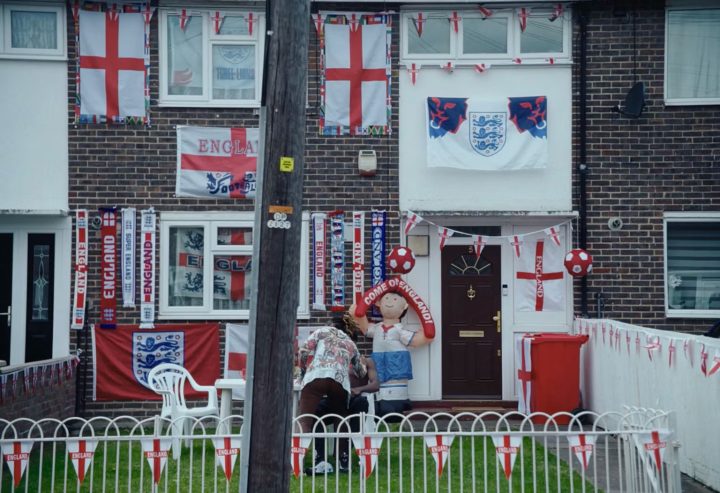
And yet what makes the advert interesting is that it arrives at a moment when English symbolism feels deeply complicated.
The St George’s flag has, in recent years, become increasingly politically charged. What should be a straightforward symbol of sporting support has often been co-opted by nationalism and racial hostility. Flags tied to overpasses and hung from lamp posts no longer feel entirely innocent. As a mixed-race British woman, born here, raised here, carrying the paperwork to prove it, I cannot pretend that imagery feels neutral.
Nike seem aware of this tension, and crucially, they do not avoid it.
Instead, the advert attempts something more difficult: reclaiming Englishness as collective rather than exclusionary. Rooney’s Shakespearean recital sits beside images of multicultural celebration and ordinary communal joy. The result is not a denial of England’s fractures, but an attempt to speak through them.
The speech itself is an inspired choice. Taken from Act II, Scene I of Richard II, John of Gaunt’s famous monologue presents England as both idealised and endangered:
‘This blessed plot, this earth, this realm, this England.’
It is one of the most recognisable patriotic passages in English literature, but it is not uncomplicated patriotism. Gaunt’s speech is haunted by anxiety about national decline, political failure, and the loss of a shared sense of purpose. Nike borrow that emotional register perfectly. The advert understands that modern English identity often feels suspended between pride and discomfort.
Football, perhaps more than anything else, still has the power to temporarily bridge that divide.
There is something strangely moving about Rooney, dressed in absurd Renaissance frills, reciting Shakespeare over images of modern England preparing for the World Cup. On paper it sounds ridiculous. On screen it feels sincere.
And from a marketing perspective, it is brilliant.