I used to think I knew Pride and Prejudice before I had really read it.
I remember watching the BBC show ‘Lost In Austen’, which seemed like enough exposure for me to decide that Austen’s novel was essentially the blueprint for the modern rom-com.
It is easy to think that. The love story is everywhere: the awkward proposal, the slow shift in feeling, the inevitable movement towards marriage.
But actually reading the novel closely, it starts to feel less like a romance and more like a study in snap judgements, self-awareness, and the discomfort of recognising your own flaws.
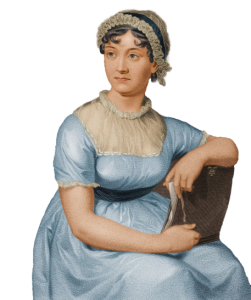 Written by Jane Austen in 1797 under the title First Impressions, and published in 1813, the novel is deeply rooted in its time. Class, money, reputation, and marriage shape nearly every decision the characters make.
To me, none of those things feels especially distant.
A novel that knows exactly what it’s doing
There is something remarkably controlled about Austen’s writing, though it never feels rigid.
The prose is elegant, clear, and often very funny. Conversations are constantly working beneath the surface. They reveal character, shift relationships, and quietly move the plot forward without drawing attention to themselves.
Nothing is wasted. That is part of what makes the novel so engaging. It has detail without dragging, structure without feeling mechanical. Every scene adds something, which makes it surprisingly difficult to put down. Whenever someone asks me where to begin with the classics, Pride and Prejudice is almost always my answer.
Its themes still feel recognisable too: class, privilege, money, love, social performance. These are not historical curiosities. They remain part of how people navigate the world.
Writers like George Eliot and E. M. Forster saw that clearly. Austen’s influence runs quietly through modern literature in the way relationships, social pressure, and inner lives are handled. So, when you watch 10 Things I Hate About You, or reference “that hand flex” from Pride & Prejudice, it is worth remembering where much of it began.

Being wrong, and enjoying it
At the centre of the novel are two people convinced they understand everyone around them.
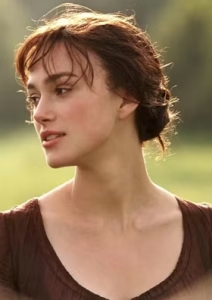
Elizabeth Bennet is observant, witty, and deeply confident in her own judgement. She prides herself on seeing clearly.
She does not simply misjudge Fitzwilliam Darcy. She enjoys misjudging him.
Darcy is aloof, dismissive, and, at least initially, difficult to like. Why would Elizabeth make an effort to think well of him? Why would she soften her opinion?
He is wealthy, well-connected, and entirely unimpressed by her. It would be easy, in that situation, to defer to him. Elizabeth does the opposite, and her irritation sharpens into a kind of cultivated mockery.
On the flip side, Darcy has his own version of the same problem. He is quick to measure people against his own sense of status, and just as quick to dismiss what falls short of it. He looks down on others in a surprisingly similar vein to Elizabeth, despite being at odds for much of the book.
But in the end, both of them are wrong.
What matters is that they come to recognise it. Slowly, and not without discomfort, they begin to see how ‘pride’ and ‘prejudice’ distort the way they see other people. The transformation is subtle, unfolding almost between the lines, which is precisely why it feels convincing.
That shift is what gives the novel its depth.
Not just a “romance”
It is often labelled a “girls’ book,” usually because it centres on love and marriage, but this misses what is actually at stake.
Marriage in Pride and Prejudice is tied to security, social standing, and survival. For the Bennet sisters, it is not just emotional. It determines the shape of their future.
Each sister responds differently, and that is part of what makes the novel feel so alive. They are not interchangeable.
 Lydia Bennet is impulsive, funny, and completely unrestrained. There is something genuinely endearing about her, even as her choices carry real consequences.
Mary Bennet, by contrast, is earnest to the point of discomfort. She is self-serious, slightly awkward, and painfully aware of her own shortcomings.
Even the more exaggerated characters feel grounded. Mrs Bennet is shrill, anxious, and often ridiculous, but her urgency comes from a real fear about her daughters’ futures.
And Mr Bennet, with his dry detachment, is funny in a very different way. His wit often lands at the expense of his own family.
The novel is genuinely hilarious. That sometimes gets overlooked.
Adaptations make this even clearer. The humour in the Bennet household, the awkwardness of social visits, the tiny irritations of domestic life all feel recognisable in ways that are almost uncomfortable.
The comedy works because it is rooted in recognition.
The parts that never disappeared
At its core, Pride and Prejudice is about human behaviour.
The idea of self-reflection runs through everything. Elizabeth’s rejection of Mr Collins is one of the clearest examples. She refuses security because accepting it would come at the expense of her own sense of self.
That tension still exists. The balance between independence and expectation has not disappeared.
Neither has Austen’s understanding of family life. The loyalties, frustrations, embarrassments, and small absurdities she writes about still echo through modern storytelling.
And the humour still lands.
So why read it now?
Because it is not simply a story about who ends up with whom.
It is about how easy it is to misread people. How satisfying it can feel to hold onto that misreading. And how difficult it is to admit when you were wrong.
It is a novel about learning to see properly.
Which sounds simple, until you try it.
Further Reading
If you fancy reading more about the novel, these are a good place to start:
- Austen, Jane. Pride and Prejudice. Edited by Vivien Jones. London: Penguin Classics, 2003.
- Burgan, Mary A. “Mr Bennet and the Failures of Fatherhood in Jane Austen’s Novels.” The Journal of English and Germanic Philology 74, no. 4 (1975): 536–52.
- Newton, Judith Lowder. “Pride and Prejudice: Power, Fantasy, and Subversion in Jane Austen.” Feminist Studies 4, no. 1 (1978): 27–42.
- Hume, Robert D. “Money in Jane Austen.” The Review of English Studies 64, no. 264 (2013): 289–310.
- Anderson, Walter E. “Plot, Character, Speech, and Place in Pride and Prejudice.” Nineteenth-Century Fiction 30, no. 3 (1975): 367–82.