“Being human was the best he could do. Without man there would be no evil. But there was also no good, nothing moral built over the world of fact. Humans were responsible for it all.”
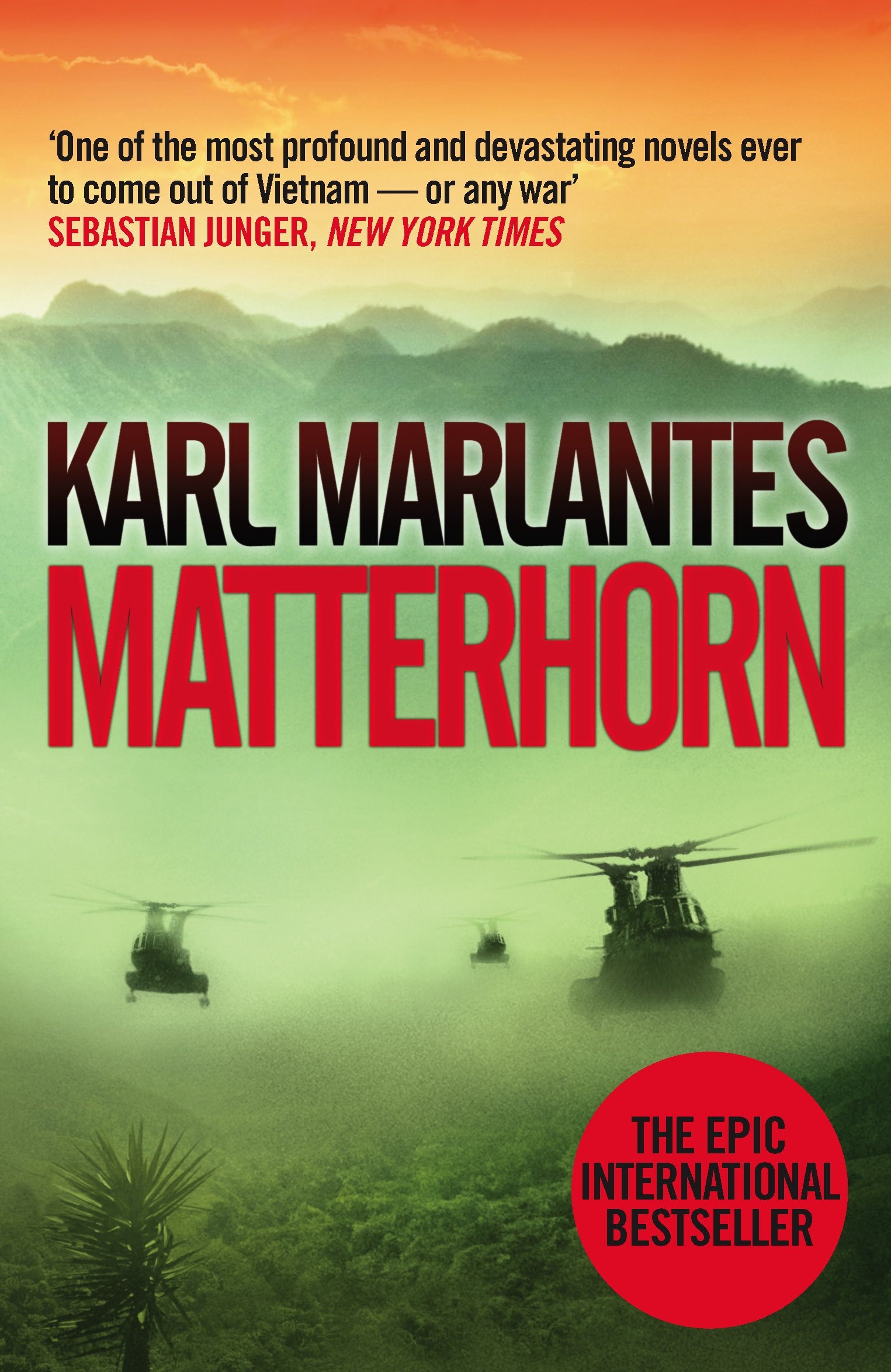
I needed some time to think before writing about Matterhorn. It is unlike almost any other war novel I have read.
What struck me most is that the novel does not focus primarily on the dramatic violence of combat. Instead, Marlantes spends much of the book exploring the environment, the terrain, and the daily realities faced by the soldiers.
Rather than writing about the sensationalised moments of guerrilla warfare, Marlantes focuses on the physical hardships of jungle life. The soldiers struggle with leeches, jungle rot, exhaustion, and the practical difficulties of surviving in an environment that offers no comfort or structure. His descriptions are vivid and deeply human. The novel becomes less about heroic action and more about endurance.
The book is certainly not short. At nearly 700 pages, it demands patience from the reader. The amount of detail can sometimes feel overwhelming, and I occasionally struggled to maintain momentum while reading. There is only one truly dramatic scene roughly two thirds of the way through the novel, and much of the rest consists of the slow accumulation of daily experiences.
Despite this, I did appreciate the way Marlantes develops the soldiers and their relationships. The shifting perspectives can initially feel disorienting, particularly because they often occur without clear transitions, but eventually I became invested in the characters and their individual stories.
One element I found particularly interesting was the way the novel engages with race relations within the American military. References to the Civil Rights Movement appear throughout the story, reflecting the broader social tensions of the period.
That said, I did feel that some of the Black characters could have been more fully developed.
By the end of the novel, one striking detail stayed with me. I realised that I had forgotten the protagonist’s first name. The soldiers are so frequently referred to by their surnames that individual identity slowly disappears. It becomes a quiet reminder of how military structures can erase personal identity.
The ending of the novel is devastating, and I found myself needing some time to recover afterwards. From roughly page 550 onward, I was completely absorbed. The question that remains for me is whether the powerful ending fully justifies the slower opening sections. I am still unsure.
Wellington’s edit on 1st February 2026: This review initially was rated as 3.5 stars, but I have since reflected and think 4 stars is now more appropriate. Matterhorn has undeniably stayed with me.